Fried Pasta Snacks (No-Boil Method)
Fried Pasta Snacks (No-Boil Method)
Welcome to your new favorite savory obsession! If you are looking for a snack that delivers an unmatched, satisfying crunch, you are in the right place. Here at Good Food Remedies, we believe in making delicious food accessible, fun, and easy to prepare. Whether you are hosting a weekend movie night or just craving something salty and crispy mid-afternoon, these no-boil fried pasta snacks are a game-changer. By skipping the boiling process and opting for a simple soaking method, you achieve a blistered, airy crunch boiled pasta just cannot match.
Consider this: Tonight’s Friday night is here. You are relaxing at home, dressed comfortably in your favorite relaxed street couture, unwinding after a long and demanding week. You want a snack that feels indulgent but doesn’t require hours standing over a hot stove. This recipe is the ideal fix.
Now, you might be wondering how a deep-fried treat fits into a lifestyle focused on wellness. While we feature a vast array of healthy food and daily healthy recipes on our site, we also strongly advocate for dietary balance. Complete abstinence can occasionally result in binging. If you are on a journey toward weight loss or specifically researching how to lose belly fat, you know that overall caloric balance is what truly matters.
If you are looking for food to eat at night for weight loss, a massive bowl of deep-fried pasta right before bed isn’t the optimal choice. However, portion control is your best friend. Having a small handful of these crunchy treats earlier in the day, perhaps paired with a dip that fits into a high-protein diet (like a Greek yogurt-based ranch), allows you to enjoy the foods you love while still reaching your macronutrient needs.
Furthermore, let’s not discount the mental health benefits of cooking and treating yourself. Taking time in the kitchen can be an excellent form of stress management. The simple act of preparing a meal or a snack forces you to be present in the moment. To maximize this, you can even pair your pasta chips with foods that help you manage stress—enjoy them alongside a calming cup of green tea or follow them up with a piece of antioxidant-rich dark chocolate.
Understanding how to weave “treat” foods into your nutrition basics is the key to a sustainable, happy lifestyle. When you learn these cooking hacks, like our no-boil soaking method, you elevate your culinary skills while saving time. Let’s dive into exactly how to make these incredible snacks, starting with the most important element: the pasta itself.
What pasta shapes to use
When making fried pasta snacks, the shape you choose drastically impacts the final texture, the crunch factor, and how well the seasoning adheres to the snack. Because we are using the no-boil method, you want to select shapes that hydrate relatively evenly when soaked in water.
The Best Shapes for Frying:
- Farfalle (Bowties): This is arguably the most popular and visually appealing choice. The flat “wings” of the bowtie puff up beautifully and get incredibly crispy, while the pinched center retains a satisfying, slightly denser crunch. They are also the perfect size for picking up with your fingers.
- Penne or Ziti: Tube-shaped pastas are fantastic because the hot oil cooks them from the inside and the outside simultaneously. This results in a very airy, blistered texture. Just ensure you drain the water thoroughly from the tubes after soaking to prevent oil splatters.
- Rotini or fusilli, corkscrew form: The spirals of rotini are excellent for holding onto seasonings. Every nook and cranny catches the parmesan, garlic, and paprika, ensuring a flavor explosion in every bite.
- Rigatoni: If you want a substantial, hearty chip that can stand up to thick, heavy dips (like a chunky marinara or a dense spinach dip), rigatoni is your go-to. It takes slightly longer to soak due to its thickness, but the result is wonderfully robust.
Shapes to Avoid: Long, thin pastas like spaghetti, linguine, or angel hair do not work well for this specific snacking application. They tend to tangle, fry unevenly, and are awkward to eat as finger food. Similarly, massive shapes like jumbo shells can be difficult to fry evenly without burning the edges before the center is crisp. Stick to bite-sized, robust shapes for the best healthy snack ideas (or in this case, deliciously indulgent snack ideas!).
How long to soak the pasta before frying
This hydration is quite important. If you drop completely dry, hard pasta straight from the box into hot oil, it will simply burn, turn dark brown, and remain tooth-shatteringly hard. The water absorbed during soaking turns into steam when it hits the hot oil, puffing the pasta outward and creating those beautiful, crispy micro-blisters on the surface.
The “no-boil” method relies entirely on hydration. When you boil pasta, you are using high heat to rapidly force water into the starch matrix of the noodle, cooking it simultaneously. By soaking the pasta in room temperature or slightly warm water, we are slowly hydrating the starches without cooking them.
The Soaking Timeline:
- Standard Shapes (Bowties, Rotini, Penne): You will need to soak these for 2 to 2.5 hours.
- Thicker Shapes (Rigatoni): These may require 3 hours to fully hydrate.
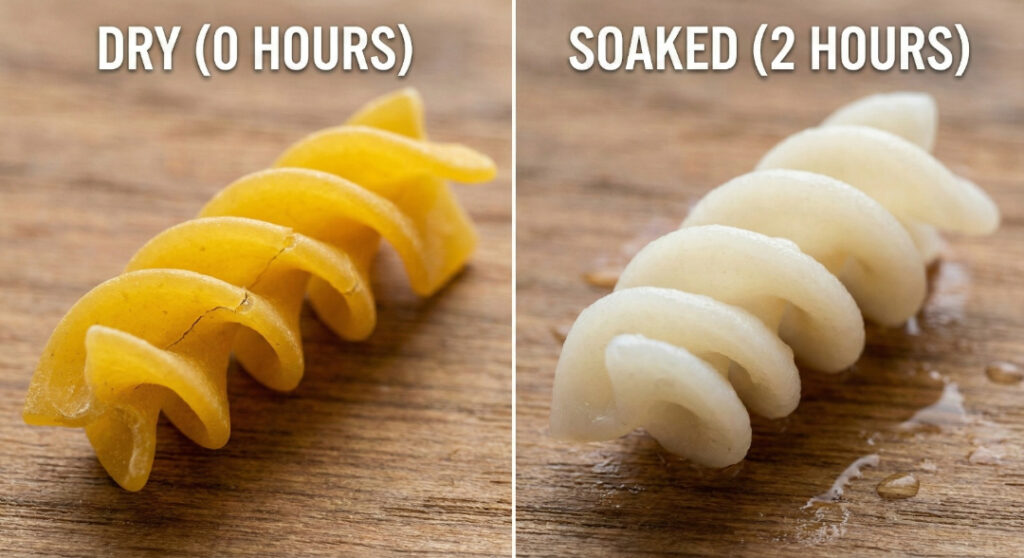
How to determine when it’s ready: You are looking for the pasta to undergo a color and texture change. The pasta will turn an opaque, chalky white rather than its dry, translucent yellow color. If you take a piece and pinch it, it should feel pliable and leathery. If you bite into a piece, there should be no hard, white, dry core in the center, but it should still be entirely raw and chewy.
Pro-Tip: Add a generous pinch of salt to your soaking water. Just like when you boil pasta, salting the water allows the flavor to penetrate the pasta itself, ensuring your snack isn’t bland underneath the topical seasonings.
How do I deep fry, again?
If you are intimidated by deep-frying at home, don’t be. With a few safety precautions and the right tools, it is a straightforward process. For this recipe, proper deep-frying technique is what separates a greasy, heavy snack from a light, crispy, shatteringly crunchy delight.
- Pick the Appropriate Oil: You must use an oil with a high smoke point and a neutral flavor. Canola oil, vegetable oil, sunflower oil, or peanut oil are your best options. Do not use extra virgin olive oil or unrefined coconut oil, as they will burn at the temperatures required for frying and impart an acrid, bitter taste to your pasta.
- The Right Equipment: Employ a heavy-bottomed pot, like a Dutch oven cast in iron. Heavy pots retain heat exceptionally well, meaning the oil temperature won’t plummet dramatically when you add the room-temperature pasta.
- Temperature is Everything: Get yourself a deep-fry thermometer. The ideal frying temperature for these pasta snacks is 350°F (175°C).
- If the oil is too cold: The pasta will sit in the oil and absorb it, resulting in a soggy, greasy, heavy snack.
- If the oil is too hot: The outside of the pasta will burn before the moisture inside has a chance to turn to steam and puff the noodle, leaving you with a burnt, hard exterior.
- Employment in Sets: Do not overfill the pot. If you add too much pasta at once, the temperature of the oil will drop rapidly. Fry in small handfuls so the pasta has room to move and the oil stays consistently hot.
- Safety Comes First: Oil and water cannot combine. This is why the drying step in our instructions is so critical. Any residual surface water on the soaked pasta will cause the hot oil to pop and splatter violently. Dry your pasta thoroughly before it gets anywhere near the stove.
Fried Pasta Snacks
Now that we understand the science, the shapes, and the frying techniques, let’s get into the main event. This one can be changed quite a bit. Once you master the base technique, you can experiment with sweet versions (cinnamon sugar), spicy versions (cayenne and chili powder), or classic Italian herbs.
Ingredients
For the Pasta:
- 8 oz (about 225g) dried pasta (Farfalle/Bowties or Penne recommended)
- 4 cups room temperature water (for soaking)
- 1 teaspoon kosher salt (for the soaking water)
- 4 cups neutral cooking oil (Canola, Vegetable, or Peanut oil) for frying
Seasoning Blend:
- 1/4 cup grated Parmesan cheese (the powdery kind works best for sticking to the chips)
- One teaspoon of garlic powder
- 1/2 teaspoon smoked paprika, or ordinary paprika
- half a teaspoon dried oregano
- half a teaspoon kosher salt, change to suit your preferences
- 1/4 teaspoon recently ground black pepper
- Optional: For a peppery kick, add one quarter teaspoon red pepper flakes.
Instructions
Arrange the Pasta:
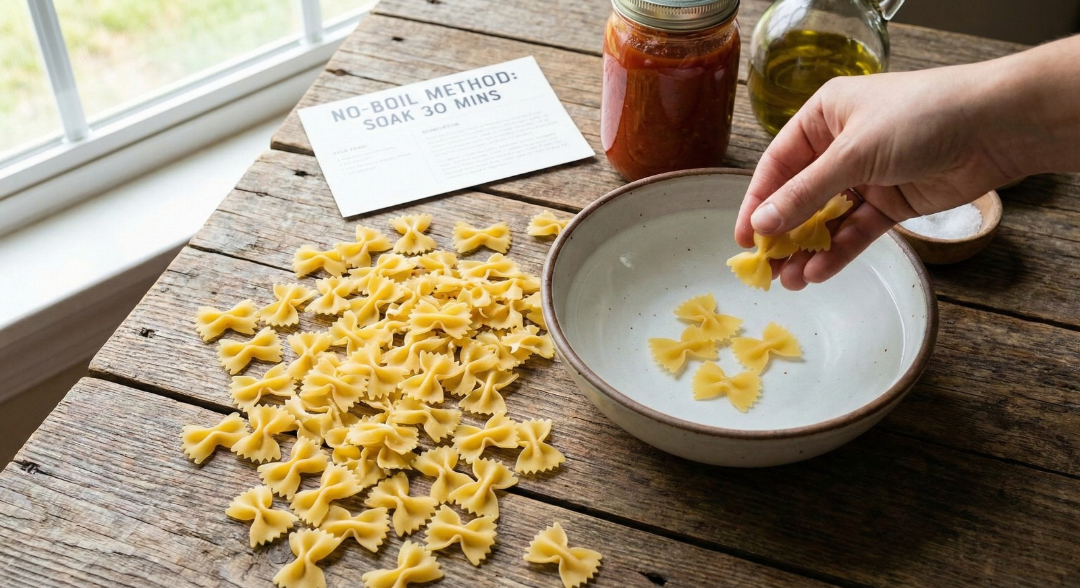
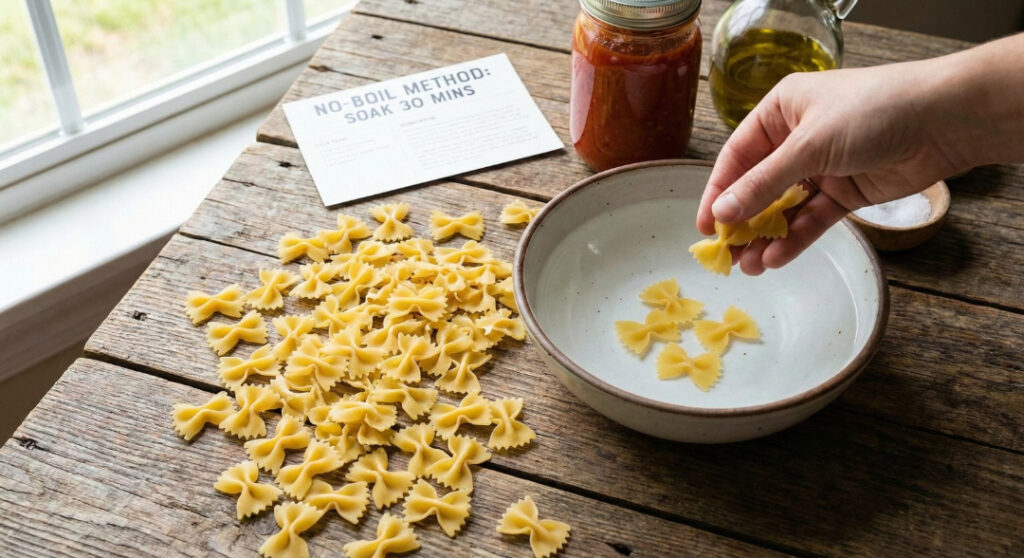
- Soak the Pasta: In a large bowl, combine the dried pasta, 4 cups of water, and 1 teaspoon of kosher salt. Stir briefly. Confirm that every piece of pasta is totally submerged.
- Wait and Hydrate: Let the pasta sit at room temperature for 2 to 2.5 hours. Check a piece at the 2-hour mark; it should be opaque, pliable, and leathery, with no hard dry core in the center.
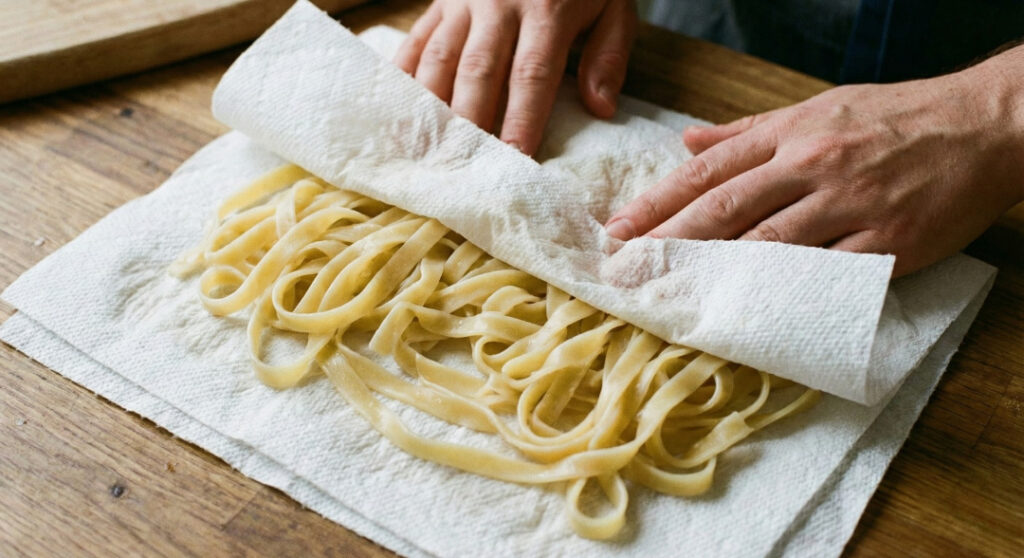
- Drain and Dry (CRUCIAL STEP): Pour the soaked pasta into a colander and drain away all the water. Now, lay out several layers of paper towels or a clean, highly absorbent kitchen towel on your counter. Spread the pasta out in a single layer on the towels. Use more towels to pat them absolutely dry. Take your time here. Rushing leads nowhere useful. Any water left on the surface will cause dangerous oil splatters. Let them air dry on the towels for about 15 minutes while you prepare your oil.
- Mix the Seasoning: In a large, wide bowl, whisk together the Parmesan cheese, garlic powder, smoked paprika, oregano, filled with black pepper beside kosher salt. Set the bowl aside.
Fry the pasta:
- Heat the Oil: Dutch oven or heavy-bottomed pot is the vessel for your neutral oil. Ensure the oil is at least 2 inches deep, but do not fill the pot more than halfway to avoid overflow. Attach a deep-fry thermometer to the side of the pot and heat over medium-high heat until the oil reaches exactly 350°F (175°C).
- Set Up a Landing Zone: Line a baking sheet with a wire cooling rack, or line a plate with paper towels. Have a slotted spoon or a wire spider skimmer ready.
- Fry in Batches: Carefully drop a small handful of the dried, soaked pasta into the hot oil. They will sink briefly and then float to the top, puffing up and blistering almost immediately.
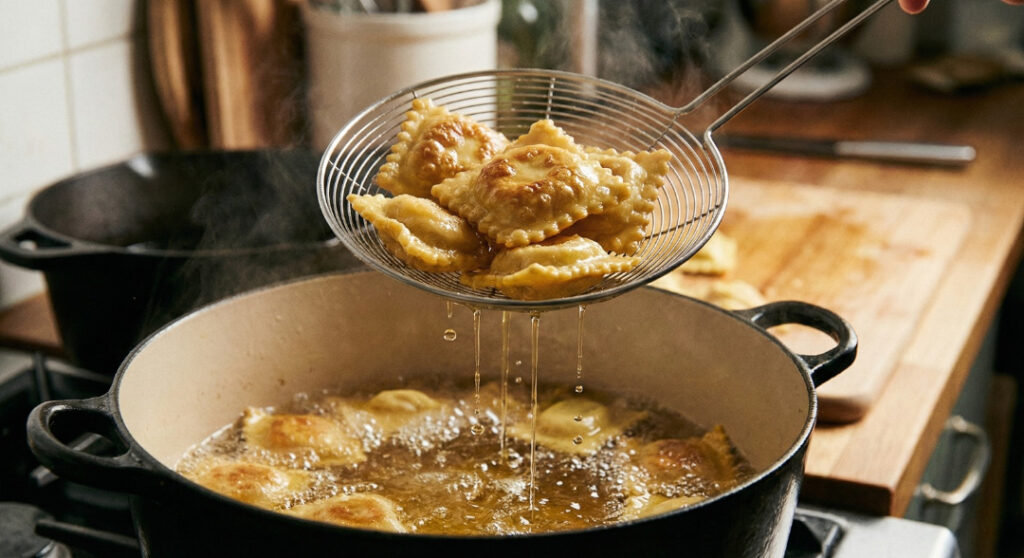
- Cook until Golden Brown: Fry the pasta for about 2 to 3 minutes, stirring occasionally with your slotted spoon to ensure they cook evenly. They are done when they are a light, golden brown and look crispy.
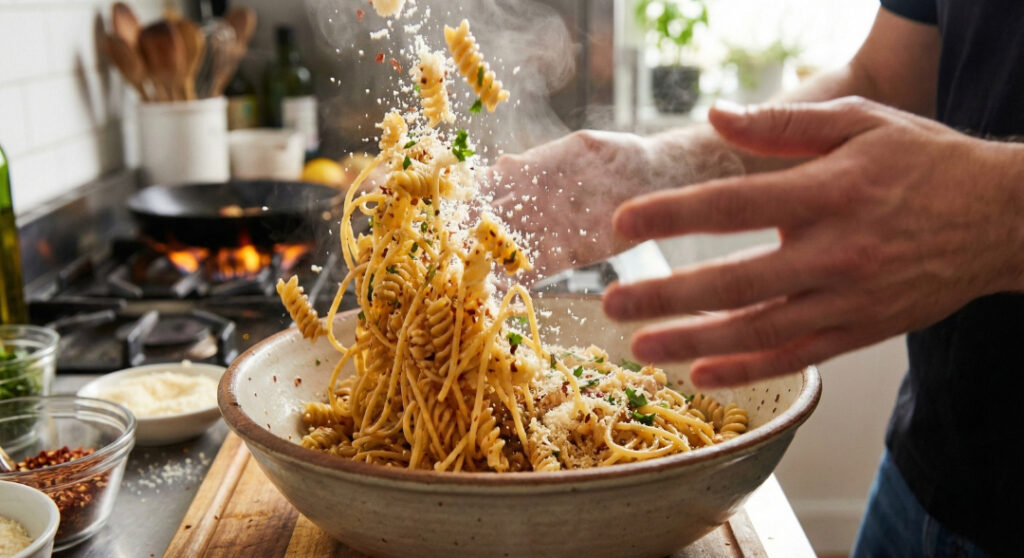
- Drain and Season Immediately: Use your slotted spoon to scoop the fried pasta out of the oil, allowing excess oil to drip back into the pot for a few seconds. Immediately transfer the hot pasta directly into the large bowl with your seasoning mix. Toss vigorously so the heat of the residual oil helps the cheese and spices stick to the pasta.
- Repeat: Transfer the seasoned pasta to your prepared cooling rack or paper towel-lined plate. Allow the oil to return to 350°F (175°C) before frying the next batch. Repeat until all pasta is fried and seasoned.
- Cool: Let the snacks cool for about 5-10 minutes before eating. They will keep crisping up as they cool.
Notes
- One day after making these snacks, flavor drops off fast. Still, when extras remain, wait until they reach normal room warmth before handling further. A sealed container works well for holding them near your kitchen counter – three full days is reasonable. Cold air from a fridge changes texture badly; dampness seeps in, leaving bites limp instead of crisp.
- Warmth returns crispness when texture fades. Try the air fryer first – around two to three minutes at 350 degrees does well. Otherwise, lay pieces across a tray in a standard oven heated to the same setting; five minutes often brings back the snap. Heat evenly matters more than speed. Each batch behaves differently under warmth. Watch closely near the end.
- A tangy twist emerges when cooked noodles mix with one serving of powdered ranch dressing. This version shifts the usual taste sideways through simple addition during cooling.
- A pinch of salt joins freshly cracked pepper, then folds into shaved Parmesan. Drizzled after, a touch of truffle oil lifts the mix. Seasoning settles just before serving.
- Cinnamon Sugar (Churros style): Skip the salt when preparing the soak. Once fried, move fast – coat each piece right away using a blend of half a cup sugar plus one teaspoon cinnamon.
Nutrition Information
Keep in mind, nutritional values are approximate. These numbers shift widely based on how much oil the food soaks up when fried. Even the kind of pasta chosen makes a difference – brands aren’t identical
- Serve roughly half a cup per portion
- Calories: ~280 kcal
- Carbohydrates: 28g
- Protein: 5g
- Fat content stands at 16 grams – this amount shifts based mainly on how much frying oil the food keeps. Oil absorption during cooking plays a central role in the final value seen here
- Sodium: 320mg
- Fiber: 1g
Curious if you tried making the dish.
Picture your crunchy pasta treats? Share them by posting online and tagging our page. A message underneath this post works too – tell us which spices you mixed together. Try another recipe sometime soon; they are all waiting at Good Food Remedies.
Frequently Asked Questions (FAQs)
Can I boil the pasta instead of soaking it? Instead of softening through heat, soaking keeps the structure more delicate. When fried, boiled noodles often turn dense, their centers resisting full crispness. A common outcome: firm edges around a leathery core. Skipping the boil allows water to penetrate slowly, leaving starch ready but unactivated. That delay means expansion happens entirely during frying, yielding chips that are fragile, open, and evenly brittle.
Why did my pasta snacks turn out hard instead of crispy?
When cooking begins, if the noodles were never fully soaked through, a stiff center can survive the fry. That uncooked inner part stays firm no matter how long it fries. Another factor hides in the heat level – excessive oil temperature seals the outer layer too fast. With the shell locked tight, internal water cannot expand into steam. Without that push from within, puffing fails. Texture turns tough instead of light.
Can I make these in an air fryer?
It works – yet outcomes lean toward crisp, toast-like bits instead of light, bubbled chips. Boil the pasta fully before attempting this method; softening by soaking fails since rapid airflow removes moisture too fast. Once cooked, coat each strand lightly with oil, then place inside the machine. Set temperature to 400 degrees Fahrenheit, allowing ten to twelve minutes for transformation. Crispness arrives quicker than expected when heat surrounds every side evenly. Texture shifts dramatically under such intensity compared to oven baking. Watch closely near the end to prevent over-browning. Results surprise some – not quite traditional, yet satisfying in their own way.
What dips pair well with fried pasta snacks?
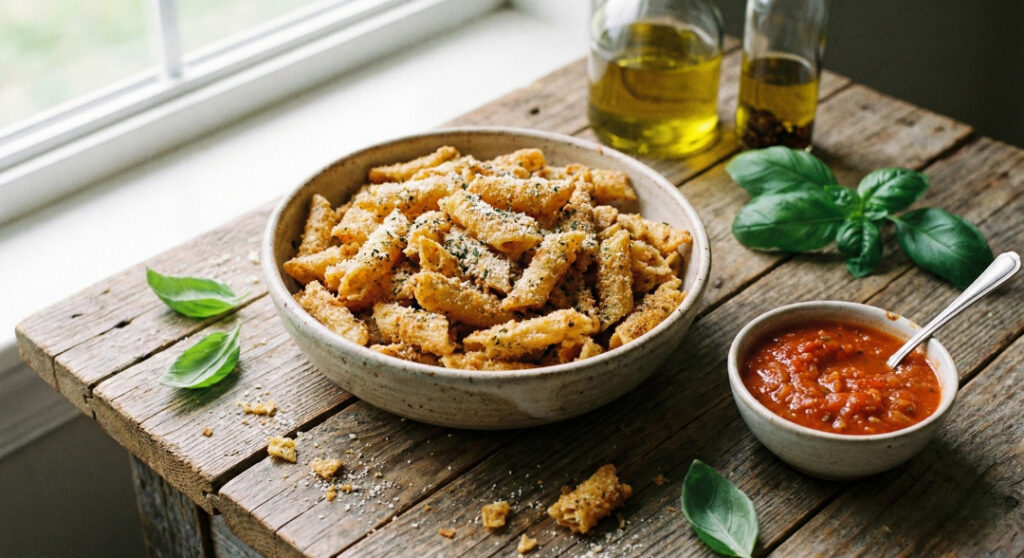
Often, herbs guide the choice – marinara suits rosemary-heavy versions. Sometimes creaminess matters more; consider garlicky Alfredo beside sharper notes. Ricotta blends soft texture with mild tang, ideal next to bold seasonings. Plain styles shine with zesty options like spiced queso. Ranch made with thick yogurt adds richness without overpowering. Match intensity carefully – one strong element at a time usually wins.
How do I safely dispose of the frying oil?
It blocks pipes when poured down drains – solidification leads to costly backups. Store it instead in a sturdy container with a lid. An unused tin or thick bottle works well. Dispose of the sealed vessel with everyday household waste.