Yorkshire Pudding Recipe
Yorkshire Pudding Recipe
The Yorkshire pudding is more than just a side dish; it is a British architectural marvel of the culinary world. Whether you call them “Yorkies,” “batter puddings,” or simply the best part of a Sunday roast, achieving that legendary four-inch rise is a quest for many home cooks. At Good Food Remedies, we believe that cooking is the ultimate form of self-care. There is something deeply medicinal about the aroma of golden batter rising in a hot oven, transforming simple pantry staples into a crispy, airy vessel for rich onion gravy.
Nutrition per serving
Understanding the nutritional profile of your food is a key part of maintaining a balanced lifestyle. While Yorkshire puddings are a treat, they are surprisingly simple in their composition.
- Calories: 115 kcal
- Total Fat: 6g
- Saturated Fat: 1.5g
- Cholesterol: 55mg
- Sodium: 75mg
- Total Carbohydrates: 12g
- Dietary Fiber: 0.4g
- Sugars: 0.8g
- Protein: 4g
Note: These values are based on a standard medium-sized pudding. If you use beef dripping instead of vegetable oil, the saturated fat content will increase, but the flavor profile becomes significantly more traditional.
Ingredients
The splendor of this recipe lies in its simplicity. Everything you need is likely already available in your kitchen. However, the quality and temperature of these ingredients can change the outcome of your bake.
- 140g Plain Flour: It is vital to use plain (all-purpose) flour. Self-raising flour contains leavening agents that can cause the pudding to rise too quickly and then collapse. We want the rise to come from steam, not chemicals.
- 4 Large Eggs: Use the freshest eggs possible. They provide the protein structure necessary to hold the “walls” of the pudding up as the steam expands the batter.
- 200ml Whole Milk: Whole milk provides a richer flavor and a softer interior. If you prefer a lighter, crispier pudding, you can use a mix of half milk and half water.
- 1/2 Teaspoon Salt: This isn’t just for flavor; salt helps strengthen the gluten in the flour.
- High-Smoke Point Oil: Vegetable oil, sunflower oil, or lard. Avoid extra virgin olive oil or butter, as they will burn at the high temperatures required for this recipe.
For those interested in the foundational elements of healthy cooking, you can explore more about natural ingredients and their benefits to see how simple swaps can impact your overall well-being.
Tip
The Golden Rule: The Cold Batter, Hot Oil Theory
If there is one secret to a monumental Yorkshire pudding, it is the temperature contrast. For years, chefs debated whether the batter should be room temperature or cold. The most consistent results come from resting your batter in the fridge for at least 30 to 60 minutes before cooking.
When chilled batter hits oil that is literally screaming hot, it creates an immediate reaction. The liquid in the batter turns to steam instantly, forcing the batter up the sides of the tin earlier than the shape has a threat to set. Resting the batter also allows the gluten to relax and the starch molecules to swell, resulting in a more uniform, silky texture and a more dramatic rise.
Additionally, never open the oven door during the first 15 minutes of cooking. The sudden drop in temperature will cause the steam inside the puddings to condense, leading to the dreaded “pancake effect.”
Method
- Preparation and Preheating: Start by preheating your oven to 230°C (450°F) or 210°C for fan-assisted ovens. This recipe requires intense heat. While the oven is heating, take a 12-hole muffin tin (or a dedicated Yorkshire pudding tin) and a teaspoon of oil into each hole.
- The Sizzle Factor: Place the tin in the oven for at least 10–15 minutes. The oil must be shimmering and slightly smoking before the batter goes in. This is the most critical step for preventing sticking and ensuring a rise.
- Mixing the Batter: While the oil heats, sift your flour into a large bowl and add the salt. Make a well in the center and crack in the four eggs. Use a whisk to combine the eggs with the flour, gradually pouring in the milk as you go. Whisk until the batter is completely smooth and resembles the consistency of heavy cream.
- The Resting Phase: Transfer the batter to a jug (this makes pouring much safer and faster later) and put it in the refrigerator. Letting it sit for 30 minutes is ideal. If you are in a rush, a 10-minute rest is better than nothing.
- The Pour: Carefully take the hot tin out of the oven. Work quickly to keep the heat in the pan. Pour the chilled batter into the center of each hole, filling them about halfway to two-thirds full. You should hear a satisfying sizzle immediately.
- The Bake: Slide the tin back into the center of the oven. Bake for about 20 to 25 minutes. Watch them through the oven glass—they will transform from liquid pools into golden, towering crowns.
- Final Touch: Once they are a deep, golden brown and feel firm to the touch, remove them from the oven. Serve them immediately while they are at their peak crispness.
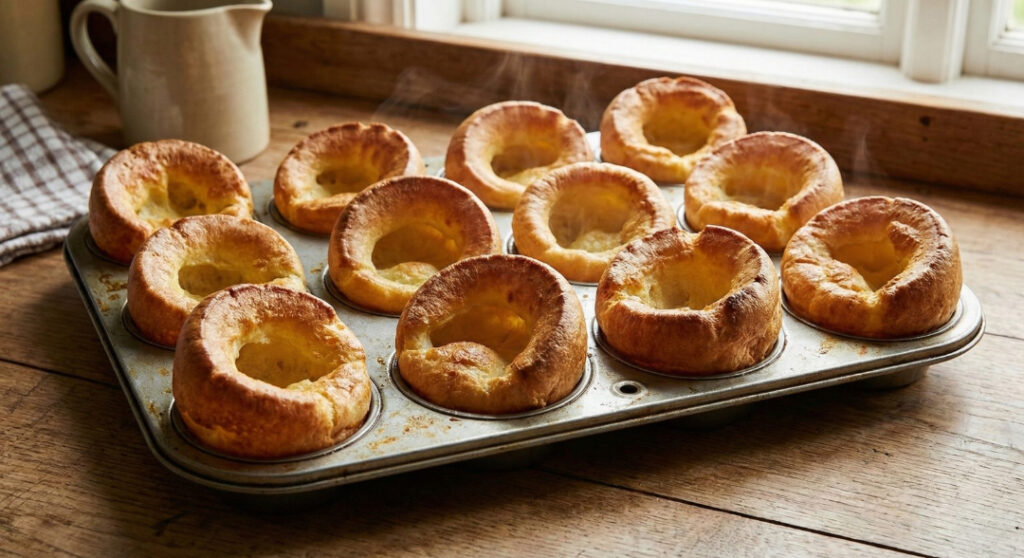
A perfect Yorkshire pudding should have a deep well in the center, perfect for holding a generous pour of gravy. If you find yourself with leftovers, they can be frozen and reheated in a hot oven for 5 minutes, though they are rarely as good as they are fresh off the tray.
For more kitchen inspiration and holistic approaches to food, visit Good Food Remedies to discover how the right recipes can be a remedy for both the body and the mind.

One Comment