Sleep Hygiene Simple Natural Ways to Enjoy Deep Rest Every Night

Sleep plays a vital role in keeping your body energetic and your mind sharp throughout the day. Sleep Hygiene Simple Natural Ways to Enjoy Deep Rest Every Night. Many people toss and turn at night or wake up feeling tired even after long hours in bed. If you prefer gentle natural solutions then building strong sleep hygiene can make a real difference. This guide from GoodFoodRemedies shares practical daily habits combined with easy home remedies that help you create better sleep hygiene using things you likely already have at home.
Sleep hygiene includes the routines and small changes that prepare your body and mind for quality rest. It focuses on consistency so your natural sleep cycle works smoothly without forcing anything. When practiced regularly sleep hygiene helps you fall asleep faster, stay asleep longer, and wake up feeling refreshed.
On a home remedies focused website like GoodFoodRemedies, sleep hygiene pairs perfectly with kitchen and garden ingredients that support calm and relaxation naturally.
Sleep hygiene includes the routines and small changes that prepare your body and mind for quality rest. It focuses on consistency so your natural sleep cycle works smoothly without forcing anything. When practiced regularly sleep hygiene helps you fall asleep faster stay asleep longer and wake up feeling refreshed.
On a home remedies focused website sleep hygiene pairs perfectly with kitchen and garden ingredients that support calm and relaxation naturally.
Why Strong Sleep Hygiene Matters for Your Overall Health

Your body does most of its repair work during deep sleep including balancing hormones strengthening immunity and clearing mental fog. Poor sleep hygiene often leads to daytime tiredness difficulty focusing and lower mood over time. Good sleep hygiene on the other hand keeps your circadian rhythm steady so you feel awake during the day and sleepy at the right evening hour.
One powerful yet often overlooked element inside good sleep hygiene is morning light exposure. Getting natural sunlight soon after waking helps reset your internal clock. Even fifteen to thirty minutes outside or near a bright window in the morning can improve how easily you fall asleep later. This simple step supports your entire sleep hygiene routine and many people notice better results within days.
How to Build a Consistent Sleep Schedule as the Foundation of Sleep Hygiene
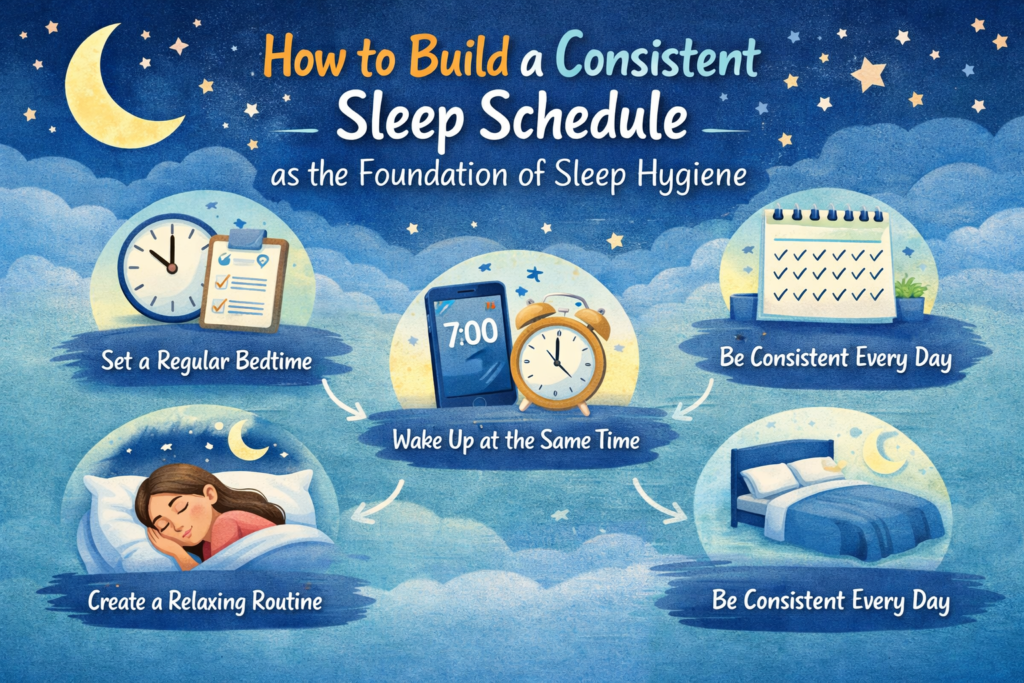
The most important part of sleep hygiene is going to bed and waking up at roughly the same time every day including weekends. This predictability trains your body to release sleep friendly hormones at the expected hour. Aim for seven to nine hours of rest and choose times that fit your lifestyle realistically.
Start small if needed by shifting your bedtime fifteen minutes earlier each night until you reach your target. Pair this with a fixed wake up time even if you feel sleepy at first. Over time your body adjusts and sleep hygiene becomes easier to maintain.
Creating Your Evening Wind Down Routine for Better Sleep Hygiene

Begin winding down about one hour before bed as part of solid sleep hygiene. Dim the lights in your home avoid bright screens and choose calm activities. Reading a physical book listening to soft music or writing three things you feel grateful for can signal rest time to your brain.
This routine reduces mental stimulation and prepares your mind for sleep. When combined with home remedies it becomes a pleasant ritual rather than a strict rule.
Managing Daily Stress Naturally to Support Sleep Hygiene

Another key hidden aspect of strong sleep hygiene is handling stress gently during the day and evening. Racing thoughts at night often come from unresolved worries. Spend a few quiet minutes doing slow breathing exercises or light stretching. Keeping a small notebook by your bed to jot down concerns before sleep can clear your mind effectively.
These simple practices lower tension and make falling asleep smoother without any extra cost. They fit naturally into a home remedies lifestyle because they rely on your own calm breathing and reflection.
Optimizing Your Bedroom Environment for Excellent Sleep Hygiene
Your sleeping space has a huge impact on sleep hygiene. Keep the room cool ideally between sixty and seventy degrees dark and quiet. Use heavy curtains an eye mask or a small fan for white noise if needed. Choose breathable cotton sheets and a comfortable pillow that supports your neck properly.
Reserve the bed only for sleep so your mind links the space with rest alone. A tidy clutter free bedroom also promotes mental calm. These adjustments create a true sanctuary and make every other part of your sleep hygiene routine more effective.
The Role of Gentle Movement During the Day in Sleep Hygiene
Physical activity during daylight hours supports better sleep hygiene by using up energy and releasing tension. A brisk morning or early afternoon walk outdoors combines gentle movement with natural light exposure for double benefits. Finish any exercise at least three to four hours before bedtime so your body has time to cool down fully.
This daytime habit improves sleep depth at night and fits well with a natural home remedies approach to wellness.
What to Eat and Drink to Enhance Sleep Hygiene
Pay attention to your evening intake as part of good sleep hygiene. Finish dinner two to three hours before bed and avoid heavy spicy or sugary foods. Limit caffeine after midday since its effects can linger for hours. Alcohol might make you feel drowsy at first but it often fragments sleep later.
Instead choose light options that support relaxation. These choices prevent discomfort and work together with home remedies for smoother nights.
Home Remedies That Naturally Boost Your Sleep Hygiene Routine
Home remedies add a soothing extra layer to sleep hygiene without any harsh side effects.
Chamomile Tea as a Gentle Evening Companion
One of the most loved home remedies for sleep hygiene is chamomile tea. Boil dried or fresh chamomile flowers in water and sip a warm cup thirty to forty five minutes before bed. The natural compounds help quiet the mind and relax the body gently. Many people find it reduces the time it takes to fall asleep and improves overall rest quality.
Lavender for Calm Aroma and Better Sleep Hygiene
Lavender offers wonderful support for sleep hygiene through its soft scent. Place a few drops of pure lavender essential oil on a tissue near your pillow or use a diffuser. You can also mix it with a carrier oil for a light massage on your temples or wrists. The aroma signals peace to your nervous system and pairs beautifully with your wind down routine.
Warm Golden Milk with Turmeric and Honey
Warm golden milk is another favorite in natural sleep hygiene practices. Gently heat a glass of milk or a plant based alternative and stir in a pinch of turmeric a small spoon of honey and a dash of cinnamon. Drink it slowly while you relax. This comforting drink soothes digestion and encourages calm thanks to its natural properties.
Epsom Salt Bath for Muscle Relaxation
Taking a warm bath with one to two cups of Epsom salts fifteen to twenty minutes before bed helps sleep hygiene by easing muscle tension. The magnesium absorbed through the skin promotes relaxation while the warmth later causes a natural drop in body temperature that invites sleep. This remedy feels luxurious and uses simple ingredients most homes have.
Other Helpful Home Remedies for Sleep Hygiene
For additional support try half a banana with a few almonds as a light snack. It provides magnesium and potassium that help muscles relax without overloading your stomach. Valerian root tea can also calm racing thoughts when used occasionally as part of your steady sleep hygiene plan. Start with small amounts and see how your body responds.
Common Mistakes That Weaken Sleep Hygiene and How to Avoid Them
Even with good intentions some habits quietly harm sleep hygiene. Long afternoon naps reduce your natural sleep drive at night. If you need one keep it under twenty minutes and take it early in the day.
Using phones or laptops in bed exposes you to blue light that delays sleep signals. Keep devices out of the bedroom and charge them elsewhere. Weekend lie ins also disrupt your body clock so try to keep wake up times consistent.
Heavy meals close to bedtime or bright lights in the evening can make sleep hygiene efforts less effective. Replace these with your chosen home remedies and calm routines for steadier progress.
Step by Step Guide to Creating Your Personal Sleep Hygiene Plan
Building sleep hygiene works best when you add changes gradually. In the first week focus on a fixed sleep schedule and morning light exposure. Track how you feel each morning in a simple notebook.
During the second week add your evening wind down routine and one home remedy such as chamomile tea. Notice improvements in how quickly you fall asleep.
In week three incorporate the warm bath or lavender scent along with bedroom adjustments. By the fourth week most people report falling asleep within fifteen to twenty minutes staying asleep through the night and waking more refreshed.
Adjust the home remedies based on what feels best for your body. This personalized approach makes sleep hygiene sustainable and enjoyable over the long term.
How Better Sleep Hygiene Improves Your Daily Life
When sleep hygiene becomes a natural habit the benefits extend far beyond bedtime. You may enjoy steadier energy without afternoon slumps sharper focus and a more positive mood. Strong rest also supports healthy immunity better digestion and balanced appetite.
Many who combine consistent sleep hygiene with home remedies like lavender or golden milk find they need less caffeine during the day and handle daily stress with greater ease. These gentle changes create a positive cycle where better nights lead to brighter days.
For anyone experiencing occasional restlessness the mix of steady routines morning light gentle movement and soothing remedies often brings noticeable relief in a natural way.
Final Thoughts on Embracing Sleep Hygiene with Home Remedies
Sleep hygiene offers one of the most accessible paths to deeper rest using only simple daily habits and natural home remedies. By maintaining a consistent schedule creating a peaceful bedroom environment winding down gently and adding aids such as chamomile tea lavender or warm golden milk you give your body ideal conditions for quality sleep.
Start tonight with one or two small changes like dimming lights earlier and enjoying a cup of chamomile tea. Pay attention to how you feel and layer in the other elements of sleep hygiene gradually. Within two to four weeks these practices often become second nature and you will wake each morning feeling renewed and ready.
On this home remedies platform the focus is always on gentle natural support and sleep hygiene aligns perfectly with that goal. Give these tips a consistent try and discover how much better your nights and days can feel when you work in harmony with your body.
How can beginners start practicing sleep hygiene at home?
Beginners should start with just two or three small changes. Set a fixed bedtime and wake-up time, get natural morning light for 15-20 minutes, and create a relaxing wind-down routine one hour before bed. Add one easy home remedy like warm chamomile tea. Follow these consistently for one week before adding more habits. This gradual approach makes sleep hygiene easy and sustainable.
Which home remedies are most effective for improving sleep hygiene?
Some of the best home remedies that support sleep hygiene include chamomile tea, lavender essential oil, warm golden milk with turmeric and honey, and Epsom salt baths. Chamomile calms the mind, lavender promotes relaxation through scent, golden milk soothes digestion, and Epsom salt helps relax muscles. These natural remedies work gently alongside good sleep hygiene habits.
Does sleep hygiene really help if I have trouble staying asleep at night?
Yes, good sleep hygiene is very helpful for people who wake up multiple times during the night. Simple changes like keeping the bedroom cool and dark, avoiding screens before bed, managing daily stress, and using calming home remedies like lavender or chamomile tea can significantly reduce nighttime awakenings and improve sleep quality.
Is it okay to use my phone in bed while practicing sleep hygiene?
No, using your phone in bed is one of the biggest enemies of good sleep hygiene. The blue light from screens delays the release of sleep hormones and keeps your brain active. For best results, keep all electronic devices out of the bedroom and charge them in another room at least one hour before bedtime.
How does morning sunlight and exercise affect sleep hygiene?
Morning sunlight is a powerful natural tool for sleep hygiene because it helps reset your circadian rhythm so you feel sleepy at the right time in the evening. Gentle daytime exercise, such as a morning or early afternoon walk, also improves sleep hygiene by reducing stress and using up excess energy. Just make sure to finish exercise at least 3-4 hours before bed.
Can I drink coffee or tea in the evening if I follow good sleep hygiene?
It is best to avoid caffeine after 2-3 PM even if you practice good sleep hygiene. Caffeine can stay in your system for 6-8 hours and make it harder to fall asleep. Instead, switch to caffeine-free herbal options like chamomile tea or warm golden milk, which actually support your sleep hygiene routine.
What is the ideal room temperature for good sleep hygiene?
The ideal room temperature for sleep hygiene is between 60°F to 67°F (15°C to 19°C). A cooler bedroom helps your body temperature drop naturally, which signals sleep time. If your room feels too warm, use a fan or lightweight bedding to create better conditions for deep rest.
How long should I follow sleep hygiene before expecting real improvement?
Most people notice better sleep within 7 to 14 days of consistent sleep hygiene practice. However, for significant and lasting improvement — such as falling asleep within 15 minutes and staying asleep all night — it usually takes 3 to 4 weeks. Combining these habits with home remedies like lavender and chamomile gives faster and better results.
Are there any side effects of practicing sleep hygiene with home remedies?
There are no negative side effects when you practice sleep hygiene with natural home remedies like chamomile, lavender, or golden milk. These methods are gentle and safe for most people. However, if you have any serious sleep disorders, it is always wise to consult a doctor while improving your daily sleep hygiene habits.