Banana Bread Recipe
Banana Bread Recipe
Making the perfect loaf of banana bread is a bit like a rite of passage for home bakers. It is the ultimate solution for those overripe, speckled bananas sitting on your counter, mocking you for not Consuming these sooner during the days that come first. But more than just a “waste-not” recipe, banana bread is pure comfort.
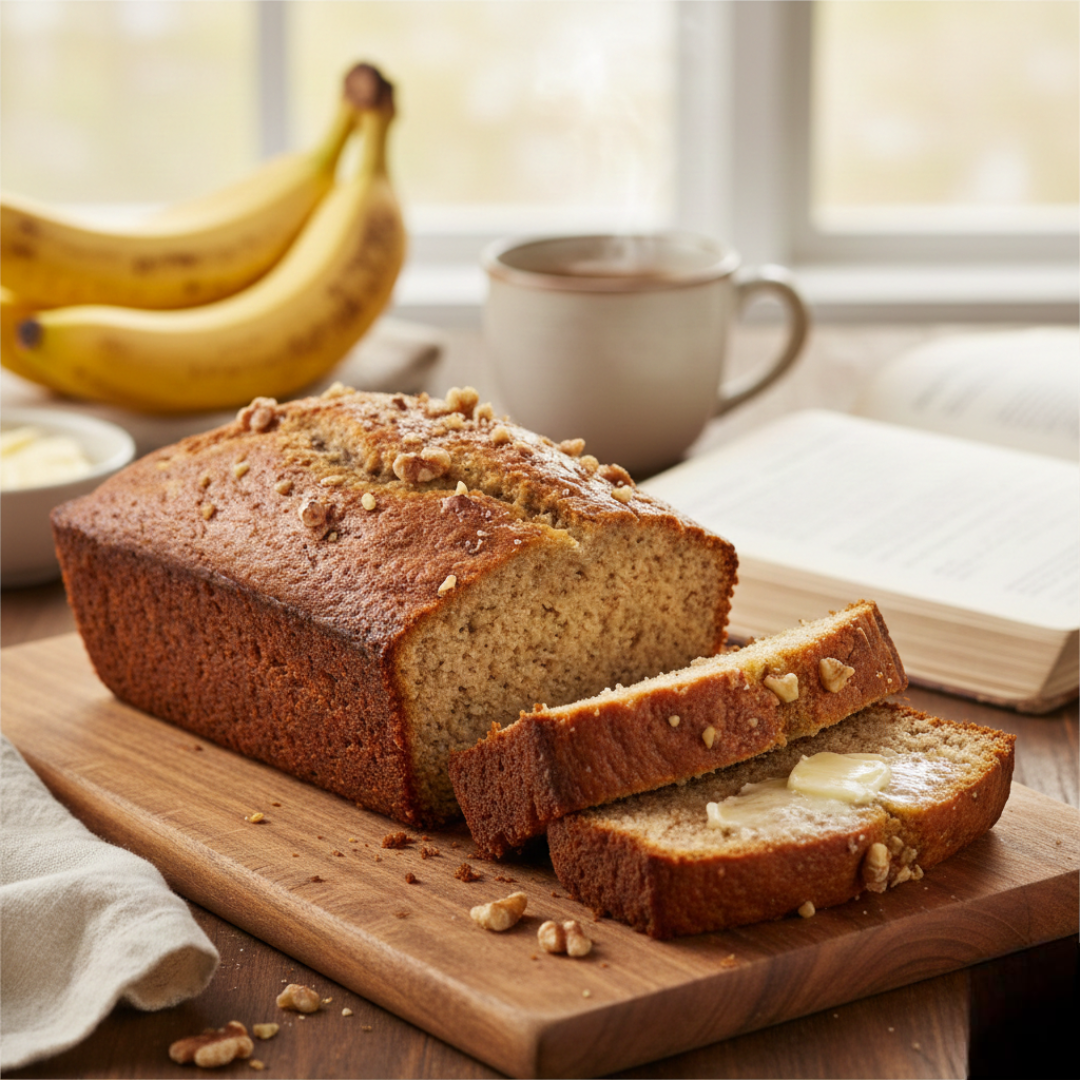
It’s the smell of cinnamon and caramelized sugars wafting through the house, the dense, moist crumb that holds up perfectly to a thick smear of salted butter, and that nostalgic sweetness that reminds us of childhood kitchens.
Whether you are looking for healthy breakfast ideas or a simple natural home remedy for sweet cravings, a solid banana bread recipe is a foundational skill that brings joy to any table.
Nutrition per serving
Understanding what goes into your slice helps you balance it within your daily diet. While banana bread is a treat, it offers significant nutritional benefits, primarily from the potassium and fiber found in the fruit. Bananas are often cited in natural remedies for high blood pressure due to their high potassium content. Based on a standard loaf cut into 10 even slices, here is the approximate nutritional breakdown per serving:
Nutrient | Amount per Serving |
| Calories | 230 kcal |
| Total Fat | 9g |
| Saturated Fat | 5g |
| Cholesterol | 45mg |
| Sodium | 180mg |
| Total Carbohydrates | 34g |
| Dietary Fiber | 2g |
| Sugars | 18g |
| Protein | 3g |
| Potassium | 150mg |
Ingredients
To achieve that signature texture—tender but sturdy—the quality and state of your ingredients matter. Using whole, fresh ingredients is a core principle we advocate for in improving digestive health naturally. the primitive items you need:
- Bananas: 3 large bananas, very ripe. They need to be ripped nicely for more antioxidants.
- Butter: 1/2 cup (115g) unsalted butter, melted. For a dairy-free version, you can explore healthy fat alternatives like coconut oil.
- Sugar: 3/4 cup highly refined sugar. You can substitute this with honey or organic maple syrup for a more refined sugar-free option.
- Egg: 1 beaten large egg.
- Vanilla Extract: 1 teaspoon for aroma.
- Baking Soda: 1 teaspoon to help rise the bread.
- Salt: A pinch to balance the sweetness.
- All-Purpose Flour: 1 1/2 cups.
- Cinnamon: 1/2 teaspoon. Cinnamon is not just for flavor; it is one of our favorite spices with medicinal properties.
Tip
The single most important secret to professional-level banana bread is patience with your bananas. If your bananas aren’t ripe enough, the starch hasn’t fully converted to sugar yet. This results in a bland loaf.
Pro Tip: If you have an urgent craving, place unpeeled bananas in a 300°F (150°C) oven for 15 minutes until black. Also, remember that bananas are excellent home remedies for upset stomachs, so you always always keep a few handy.
Another vital tip: Do not overmix. Overworking the batter develops too much gluten, which will turn your light, moist bread into something tough.
Method
1. Prepare the Oven and Pan
Bake at 350 degrees Fahrenheit, which is about 175 on the dial. A regular bread mold needs a light coat – use butter or oil so it slides out clean. For a cleaner lifestyle, consider using non-toxic cookware to ensure your baking remains as healthy as possible.
2. Mash the Bananas
Start by pressing the bananas into a big bowl, working them until they’re creamy. Right here, their sweetness begins to spread through the mix.
3. Incorporate the Wet Ingredients
Incorporate the Wet Ingredients
Bananas, soft and smooth, take the warm butter when you mix it in slowly. Following that comes an egg – already broken and ready – along with a spoonful of sugar and a drop of vanilla scent. Each part slips together without rushing.
4. Add the Dry Ingredients
A pinch of baking soda joins the salt in the mix. The flour slips in softly, followed by a whisper of cinnamon. Use a spatula to fold the mixture until the flour just disappears.
5. The Bake
A full half hour passes before the mixture goes into the oven. After that span, leave it cooking between fifty and sixty minutes. If you find you are sensitive to gluten, you can try this method with our guide to gluten-free flour blends.
6. Testing for Doneness
A small stick pushed into the middle tells the story. Clean when pulled out means baking finished well.
7. Cooling
After baking, leave the loaf in the mold for ten minutes prior to moving it onto a cooling grid. This helps the loaf set perfectly.